
The Care Inspectorate’s Knowledge for Change programme aims to support improvement and reduce restrictive practice. The full case study is available below.
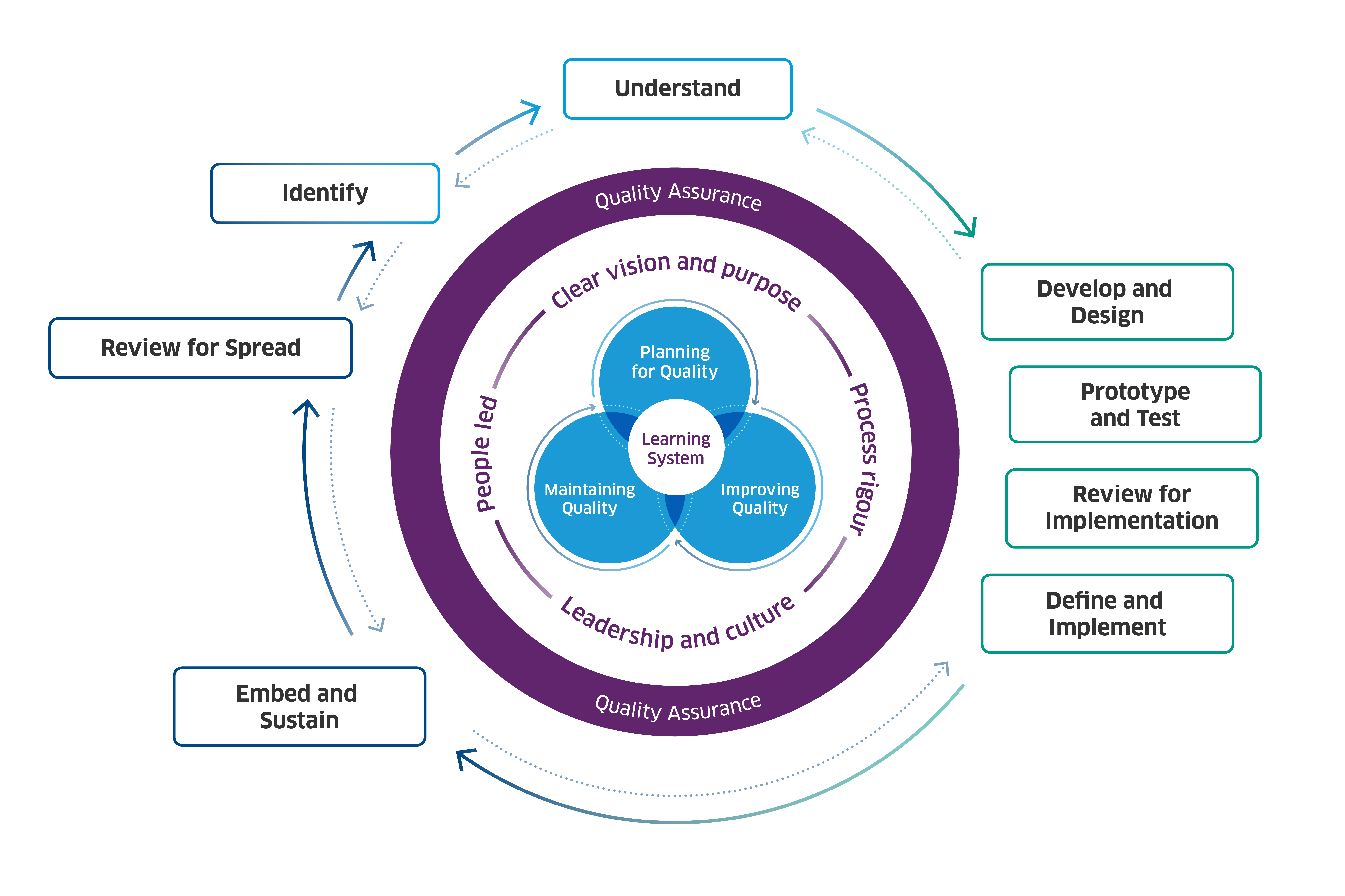
Steps of change
Identify
Identified the problem: staff did not always recognise restrictive practice, and restrictive practice was not being reviewed or reduced.
Understand
Understood the problem: inspections found that restrictive practice was not always recognised, staff lacked confidence to identify restrictive practice and needed to be empowered to look at alternatives.
Develop and design
Used an ‘all teach, all learn approach to share learning and develop solutions. Ensured psychological safety so staff could be open about current practice to then identify changes.
Prototype and test
Developed and tested a dynamic risk register for restrictive practice, tested small-scale alternatives with one resident at a time, and tracked data over time.
Review for implementation
Reviewed changes for impact and found staff had increased knowledge to identify restrictive practice, which resulted in a reduction in restrictions. Supported people have a reducing
restitutive practice care plan in place.
Define and implement
Services were supported on an individual basis to implement changes and were supported by a network to share learning, and a designated team member to support quality improvement.
Embed and sustain
Sustainability of the improvement was supported by culture shift, embedding the dynamic risk register for restrictive practice into operations, and staff taking ownership of reducing restrictive practice.
Review for spread
Spread has been supported by introducing a restrictive practice link staff member who supports staff in other homes and shares ideas and setting up a support network for leads to share ideas, challenge current practice, and embed a change culture.
Enablers of quality and change
Clear vision and purpose
The programme made sure a clear vision and purpose underpinned the work by ensuing:
- a shared goal to reduce restrictive practice use across each community
- a focus on person-led care and understanding why each restriction has been put in place
Leadership and culture
The programme ensured supportive leadership and a positive culture underpinned the work by:
- creating a psychologically safe environment where people could identify changes
- promoting a culture of curiosity, courage, and continuous improvement
- focusing on empowering frontline staff to lead change
People-led
The programme ensured a people led approach underpinned the work by:
- ensuring people’s human rights were central to all interventions
- encouraging staff to continuously think about why they were using restrictions, did they still need to be used, and could anything be done differently
Process rigour
The programme ensured process rigour by:
- using quality improvement methods such as Plan-Do-Study-Act cycles
- tracking data was tracked over time
- using a driver diagram to keep the programme on track and bring people back to the purpose