
Who the guide is for and how it is structured
This guide is intended for NHS Scotland boards and health and social care partnerships who are scoping the creation of an Early Intervention in Psychosis service for people experiencing first episode psychosis.
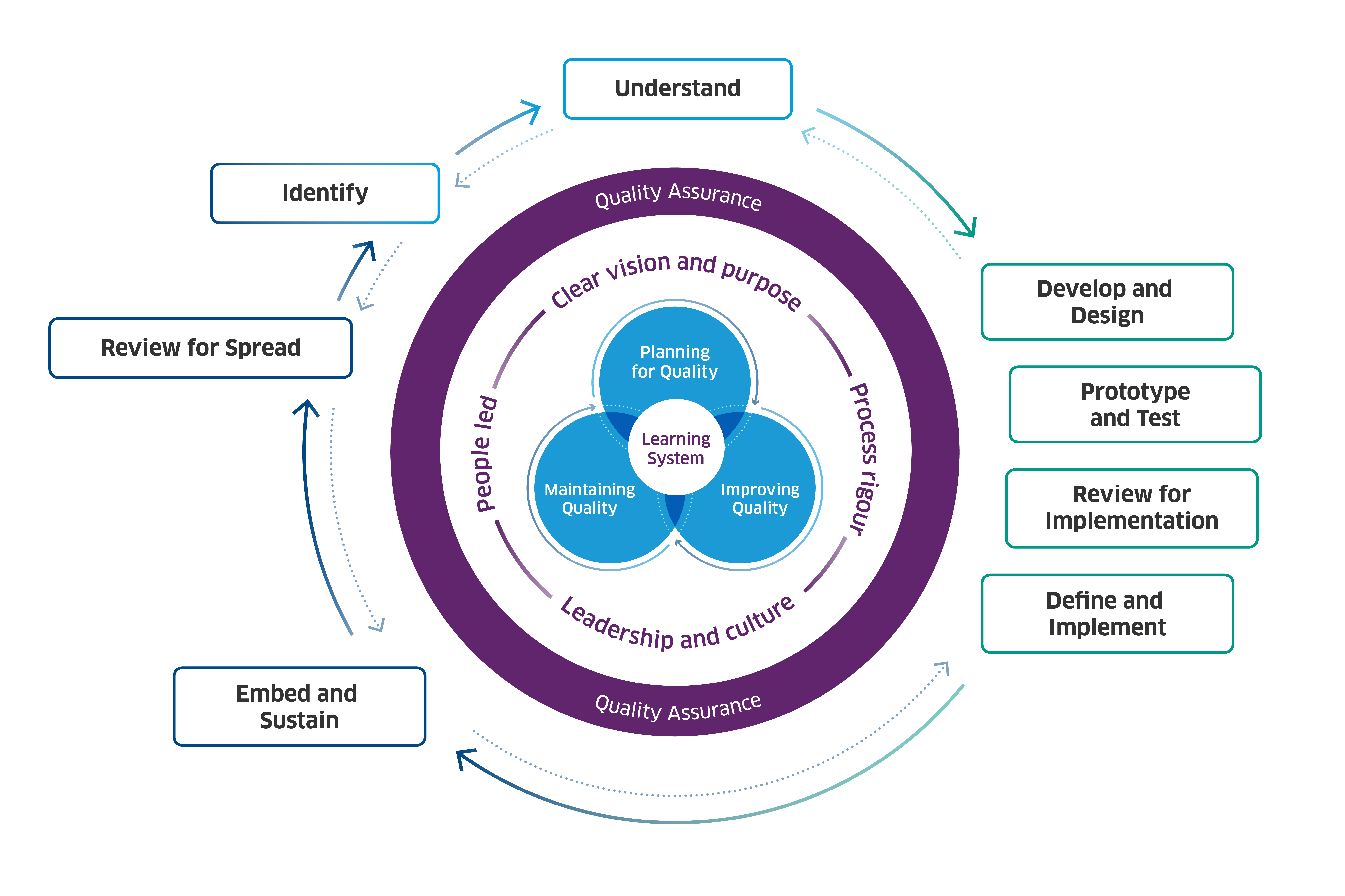
The guide is structured around the Scottish Approach to Change, which provides a clear framework and an iterative process for delivering effective and sustainable change across health and social care.
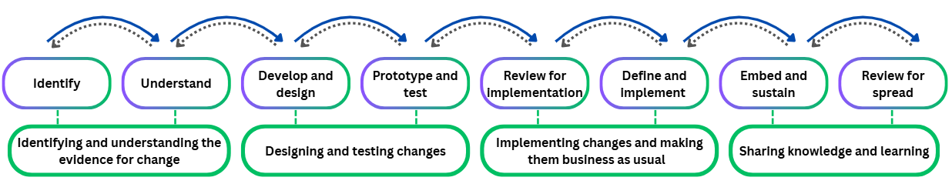
The eight steps of change have been broken down into four linked steps to ensure smooth transition through the contents of the implementation guide. The topline of the graphic below shows the steps of the Scottish Approach to Change, with the bottom line showing how the implementation guide maps to these.
What the guide is
This guide outlines a supported approach to the implementation of new Early Intervention in Psychosis services in Scotland. In recognition of the resources that are required to design and develop a new service; this guide is intended to be used as a supplement to the support available from Healthcare Improvement Scotland.
Healthcare Improvement Scotland will provide support to Early Intervention teams through the Early Intervention in Psychosis Community of Practice, which brings together current Early Intervention teams as well as services that are considering (or in the process of) developing an Early Intervention service; providing a space for professionals to connect, collaborate, problem solve and share learning.
Recommended prerequisites for starting a new service
To begin the process for developing and implementing an Early Intervention in Psychosis service, at minimum we would recommend:
- Three key starting members of staff
- team lead (beneficial to be a registered mental health nurse)
- clinical psychologist, and
- key worker (can be a registered mental health nurse, occupational therapist or social worker).
- Access to premises for the service once it launches
Design, training and set up of the service can begin with these three core members. Training available:
- Essentials of Early Intervention in Psychosis training module available through TURAS
- Where Behavioural Family Therapy and Psychosocial Interventions for Psychosis skills are absent, training is available through Public Services Delivery Scotland
What will you find in this guide?
Within the guide you will find the learning of two pathfinder Early Intervention in Psychosis teams who have prototyped the Early Intervention in Psychosis model in rural and semi-rural areas; designing and adapting their service according to local population needs and available resources. This is the learning that has formed the Implementation Guide. The guide has also been tested with NHS Ayrshire and Arran, and their experience and learning has also been incorporated.
Included in the guide are tips and advice based on this learning, along with that of the established Early Intervention in Psychosis service within NHS Greater Glasgow and Clyde (ESTEEM).
This guide aims to gather all resources and learning into a single accessible place, where you can expect to find:
- Information and guidance on Early Intervention in Psychosis
- Case studies highlighting key learning and adaptations
- Guidance, tools and outputs from service design and improvement activities
- Service templates from the pathfinder sites and ESTEEM
- Links to further resources and tools to aid setting up a new Early Intervention in Psychosis service
The intention is for this guide to be a live resource, to be updated as further learning and resources become available.
Identify and understand
This section focuses on understanding and identifying areas for improvement. It includes guidance and resources for stakeholder engagement, service design and service launch.
Designing and testing changes
This section focuses on designing and testing changes. It includes guidance and resources on Early Intervention in Psychosis pathways, service ethos, and delivery of a Quality Management System.
This section focuses on implementing changes. It includes guidance and resources on discharge pathways, gathering feedback, and supporting people after leaving the Early Intervention in Psychosis service.
This section focuses on sharing knowledge and learning. It includes guidance and resources on data collection, involving people with lived experience and ongoing improvement.